The queer guide to Madrid: Chueca and beyond
One of the longest-running gay neighborhoods in Europe, a Pride week that shuts down the city center, and two other pockets worth knowing before you plan a night out.
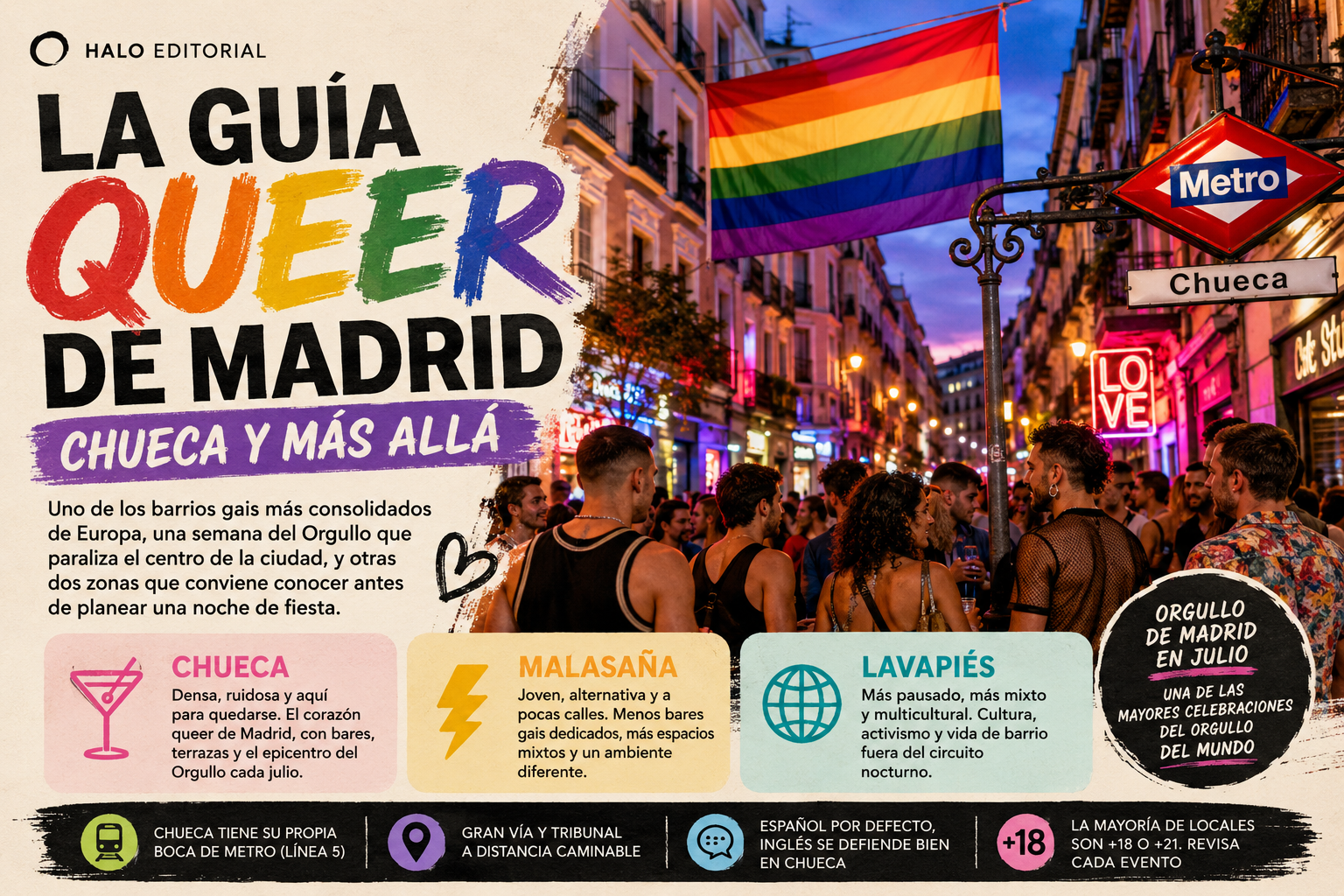
Chueca has been the center of gravity for queer Madrid since well before Spain legalized same-sex marriage in 2005 — one of the first countries in the world to do so, and Chueca is where a lot of that fight was actually organized. The neighborhood earned its reputation the slow way: decades of bars, associations, and a Pride march that's grown into one of the largest in the world, not a rebrand that happened overnight. If you're only in Madrid for a weekend, this is still where to start.
Chueca: dense, loud, and not going anywhere
Walk Calle de Pelayo or Calle de Hortaleza on any weekend night and you'll understand why Chueca doesn't need an introduction. Bars and terraces spill into the street from early evening, the metro stop shares the neighborhood's name, and the crowd is a genuine mix — long-time residents, first-time visitors, and everyone who's flown in specifically for the week around Madrid Orgullo each July, when the whole district effectively closes to anything else. It's commercial, it's a little touristy in high season, and it's still the realest gay neighborhood Spain has.
Malasaña, a few blocks and a different crowd
Head west and the scene changes register. Malasaña skews younger and more alternative — fewer dedicated gay bars, more mixed spaces where the crowd just happens to be queer that night. It's the neighborhood to check if Chueca's commercial density isn't what you're after, and it's close enough to walk between the two without planning around it.
Lavapiés, slower and more mixed
South of both, Lavapiés adds a different texture entirely — Madrid's most multicultural neighborhood, with a slower, bar-of-the-block feel rather than a single walkable strip. It's less of a nightlife destination and more where the city's cultural and activist programming tends to land outside Pride season.
If you only do one thing
Time it around Madrid Orgullo in July if you can — it's genuinely one of the largest Pride celebrations anywhere, and Chueca runs programming for the full week, not just the Saturday march. Outside of July, a Friday or Saturday night walking Pelayo and Hortaleza still gets you the neighborhood at its best.
Accessibility and practical info
Chueca has its own metro stop (Line 5), putting the whole district a short walk from the exit. Gran Vía and Tribunal both sit within walking distance if Chueca is packed during Orgullo week. Spanish is the default everywhere, but English holds up fine in Chueca's bars given how international the crowd gets each July. Most nightlife venues are 18+ or 21+ — check individual listings before you plan a night around a specific spot.